



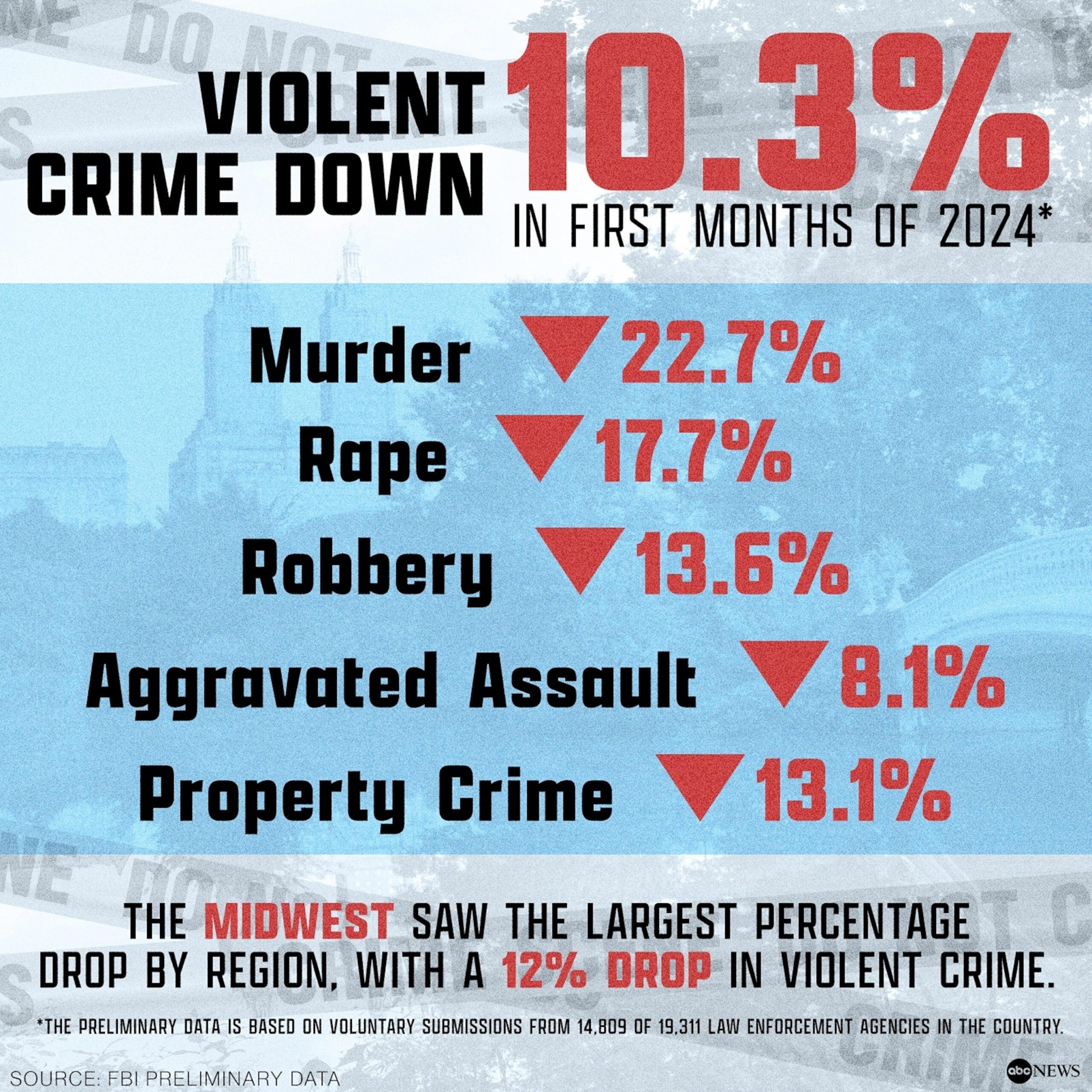
Reevaluating Violent Crime Trends: Beyond the Decline in Homicides
Despite a noticeable reduction in homicide rates, the overall incidence of violent crime in the United States is climbing, contradicting the widespread belief that public safety is steadily improving. In his insightful report for Broad + Liberty, criminologist Ben Mannes delves into the intricate patterns behind these conflicting statistics, revealing the multifaceted nature of violence in contemporary America. This article examines why concentrating exclusively on murder figures can mask broader violent crime trends and what these data imply for law enforcement and community safety efforts.
Ben Mannes on the Complex Reality of Violent Crime Trends
Popular discourse often suggests that violent crime is on the decline, primarily due to falling homicide numbers. However, Ben Mannes challenges this oversimplification by highlighting that other violent offenses—such as aggravated assaults and armed robberies—have surged in recent years. This divergence indicates that focusing narrowly on murder rates provides an incomplete and potentially misleading understanding of public safety.
Mannes urges policymakers, media, and the public to broaden their perspective by considering a wider array of violent crime metrics. Key observations include:
- An approximate 12% national increase in aggravated assault incidents.
- A significant rise in armed robberies, especially in metropolitan regions, reflecting evolving criminal behaviors.
- Persistent underreporting of domestic violence cases, which complicates accurate crime assessment.
| Type of Crime | Trend Over Last 3 Years | Severity of Impact |
|---|---|---|
| Homicides | ↓ 5% | Moderate |
| Aggravated Assaults | ↑ 12% | High |
| Armed Robberies | ↑ 15% | High |
| Domestic Violence | Data Unclear | Significant |
Decoding the Paradox: Why Violent Crime Rises as Murders Fall
While media headlines often celebrate the drop in murder rates as evidence of safer communities, a deeper analysis reveals a more complicated scenario. Violent crime overall is increasing, driven by spikes in assaults, robberies, and other violent offenses that carry substantial social and economic consequences. Experts warn that an exclusive focus on homicide statistics neglects these critical dimensions, which reflect shifting criminal patterns and law enforcement challenges.
Several factors contribute to this paradoxical trend:
- Improved Crime Reporting: Advances in data collection have made non-fatal violent crimes more visible and better documented.
- Socioeconomic Shifts: Growing income disparities and fluctuating community trust levels influence crime rates differently than homicides.
- Policing Focus: Targeted efforts to reduce gun-related murders may inadvertently displace criminal activity into other violent categories.
| Violent Crime Category | 2022 Incidence per 100,000 People | Annual Change |
|---|---|---|
| Homicide | 5.1 | -7% |
| Aggravated Assault | 150.3 | +12% |
| Robbery | 80.5 | +9% |
| Sexual Assault | 35.7 | +5% |
Consequences of Oversimplified Crime Data on Policy Development
Public safety policies often rely heavily on crime statistics, but when these figures are interpreted without nuance, they can distort the actual crime landscape. Although homicide rates have declined, other violent crimes have escalated, a reality that selective reporting can obscure. This narrow focus risks misdirecting resources and crafting ineffective prevention strategies that fail to address the broader spectrum of violence affecting communities.
For policymakers to be effective, they must analyze a comprehensive set of crime indicators. The following table illustrates how violent crime categories have shifted in a representative urban area over the past year, underscoring the importance of detailed data analysis:
| Crime Type | Percentage Change |
|---|---|
| Murders | -12% |
| Aggravated Assaults | +18% |
| Robberies | +9% |
| Sexual Assaults | +3% |
- Neglecting comprehensive trends undermines effective safety programs.
- Misallocation of resources may prioritize rare but sensational crimes over more prevalent violence.
- Community confidence can deteriorate if policies do not reflect everyday safety concerns.
Comprehensive Approaches to Combatting Violent Crime Beyond Homicide Rates
Addressing the rise in violent crime demands strategies that extend beyond the narrow lens of homicide statistics. Law enforcement and community organizations must focus on reducing assaults, robberies, and firearm-related incidents, which often receive less attention despite their significant impact on public safety. Empowering neighborhoods through community policing, enhanced surveillance technologies, and youth engagement initiatives can break cycles of violence and foster stronger relationships between residents and authorities.
Moreover, tackling underlying causes such as economic disparity, educational gaps, and mental health issues is essential for long-term crime reduction. Cities across the nation are adopting innovative programs, including:
- Violence Interruption Initiatives: Utilizing trained conflict mediators to prevent disputes from escalating into violent acts.
- Focused Deterrence Models: Concentrating law enforcement and social services on repeat offenders and individuals at high risk of committing violence.
- Investment in Social Infrastructure: Expanding access to mental health care and vocational training to provide alternatives to criminal activity.
| Intervention | Main Objective | Anticipated Result |
|---|---|---|
| Violence Interruption | Conflict Resolution | Decrease in Gun-Related Incidents |
| Focused Deterrence | High-Risk Individuals | Reduced Repeat Offenses |
| Social Services Funding | Mental Health & Employment | Prevention of Crime |
Conclusion: Navigating the Complex Landscape of Violent Crime
In summary, although the decline in homicide rates offers a hopeful sign, the overall increase in violent crime presents ongoing challenges for law enforcement agencies and communities nationwide. As Ben Mannes underscores, understanding and addressing these trends requires a sophisticated approach that goes beyond headline statistics. A balanced strategy—one that recognizes progress in reducing murders while confronting the persistent rise in other violent offenses—is crucial for fostering safer neighborhoods and more resilient communities across the country.